Documentary Archive
Historical Journeys

Hala Kodmani: Bearing Witness from Paris
The Free Syrian Army: Rise, Fragmentation and Rebirth
Born from defections in 2011, the FSA was Syria's first armed uprising — a loosely unified force that captured territory, suffered fragmentation, and left a complex legacy in the Turkish-backed Syrian National Army.
The Tiger Forces: Assad's Elite Strike Force
General Suheil al-Hassan's Tiger Forces became the regime's most effective offensive unit — recapturing Palmyra, winning Aleppo, and reaching Deir ez-Zor, all while committing documented war crimes.

The Goalkeeper Who Sang the Revolution
Abdul Baset al-Sarout was Syria's national youth team goalkeeper. When revolution broke out in 2011, he became its singing voice. When the regime destroyed his family, he took up arms. He never stopped.

Mohammed al-Bashir: From Idlib Administrator to Syria's First Post-Assad PM
Mohammed al-Bashir ran the Salvation Government — HTS's civilian administration in Idlib — for years before Dec 8, 2024. The next day, he was Syria's Prime Minister.
Abu al-Qa'qa': The Regime's Jihadi Asset Who Knew Too Much
The Aleppo preacher who funneled fighters to Iraq under regime direction — and was eliminated when he became a liability.

Riad Hijab: Syria's Prime Minister Who Fled After 64 Days
Assad appointed him Prime Minister in June 2012. 64 days later he was in Jordan calling Assad's government a 'terrorist regime.' The highest defection of the civil war.

Michel Aflaq: The Idea That Built Tyrannies
The Damascus Christian who dreamed of Arab renaissance became the unwitting architect of two of the Arab world's most brutal dictatorships.

Negotiating for a Cause the Guns Wouldn't Stop

Khaled Khalifa: The Novelist Who Stayed
Khaled Khalifa wrote the novel that defined what it felt like to live under the Assad regime. When the revolution came, he stayed. When the bombs fell, he stayed. He stayed until his heart gave out.

Diplomatising the Revolution
Noura al-Ameer: A Woman's Voice in Syria's Opposition

Sergei Lavrov: Russia's Shield for Assad

The Sednaya Release Who Became Ghouta's Warlord

Abu Sakkar: From Protester to FSA Commander — The War's Moral Collapse
Abu Sakkar joined the uprising in 2011. In 2013, he appeared in a video that shocked the world. His story is not an aberration — it is a product of what the Syrian war did to everyone it touched.
Manaf Tlass: The Insider Who Left
Bashar's childhood friend, Republican Guard commander, son of the Defense Minister — and the highest-ranking officer to defect from the Assad military.

Four Years Managing a War Nobody Wanted to Stop

Hezbollah in Syria: Operations, Sieges, and Massacres 2012–2019
Nasrallah said Hezbollah would not let Syria fall. Over seven years, he committed thousands of fighters to Assad's war — and they participated in some of the conflict's deadliest operations against civilians.
Desert Hawks: Syria's Private Oil-Field Army
A retired general with oil-field interests bankrolled a private army of Special Forces veterans — deployed alongside Wagner Group in Palmyra and Deir ez-Zor until their funding ran dry.
Jaish al-Mujahideen: The Anti-ISIS Army that Was Destroyed by HTS
Built to fight ISIS and Assad simultaneously, the Mujahideen Army lasted three years before HTS wiped out all its positions in a single night in January 2017.
Staffan de Mistura: The Third UN Envoy Syria Defeated
After Annan. After Brahimi. Four years. 500,000 dead. Aleppo fell on his watch. He said the fall of Aleppo would be a 'historic shame.' Then he resigned.
Bashar al-Assad: The Reluctant Heir Who Chose Massacre
He trained to be an eye doctor. His brother's death forced him into power. When Syria rose up, he chose artillery over reform — and lost everything in 2024.

Homs Prison: Detained While the City Burned
Inside Syria's uprising capital — activists and civilians jailed while their city was besieged outside the prison walls.

Samira Khalil: A Life of Resistance — Imprisoned by Assad, Killed by the Opposition
Samira Khalil survived Hafez al-Assad's prisons. She survived the early crackdown of 2011. Then, on a December night in 2013, Jaish al-Islam came to her office in Douma. She was never seen again.

Rémi Ochlik: 28 Years Old, Killed in Homs
He founded a photo agency at 16, won a World Press Photo prize at 28, and was killed in Baba Amr the same morning as Marie Colvin.

Syria's Diplomat-in-Chief Who Said the War Was Unwinnable — and Disappeared Into House Arrest
Building a Revolution from the Bottom Up

Hussein Harmoush: The First FSA Commander — Defection, Abduction, and Silence
In June 2011, Hussein Harmoush appeared on video from Turkey and said: soldiers, your duty is to protect the people, not kill them. He had just created the Free Syrian Army. Three months later, he was gone — abducted back into Syria and never seen again.
Abdel Aziz al-Khair: 22 Years in Prison, Then Disappeared by the State

Abu Omar al-Shishani: Chechen Commander of ISIS's Syria War Machine
Abu Omar al-Shishani was not Syrian, not Arab, and not born in any country bordering Syria. He was a Chechen-Georgian former soldier who crossed into Syria in 2012, joined ISIS, and became the face of the caliphate's military expansion — six feet tall, red beard, leading troops across northern Syria.

Hafez al-Assad: How One Man Built a Police State
From a barefoot Alawite boy in mountain poverty to absolute ruler of Syria for 29 years. He built the system that destroyed millions of lives — then handed it to his son.

Dr. Hamzeh: Staying in Aleppo When Every Other Doctor Had Left
Walid al-Muallem: The Voice That Denied Everything
For 14 years the face of Syrian diplomacy at the UN — denying chemical attacks, denying sieges, denying massacres — while the world watched it happen on video.

Mazen al-Hamada: Survivor, Witness, Disappeared
Mazen al-Hamada escaped Assad's prisons, fled to Europe, and spent years telling the world what was happening inside Saydnaya. In 2020, he returned to Syria and disappeared. His case is a study in the impossible choices facing Syrian survivors.

Riyad Naasan Agha: Culture Minister While Syria Burned
He wrote poetry and ran Syria's cultural institutions. When the revolution came, he appeared on CNN defending the crackdown. The contrast told the story of how culture had been conscripted by the Assad system.
Syria's Enforcer in Lebanon — Rustum Ghazaleh's Rise and Mysterious Death

Francois Hollande: France's War Against ISIS and the Limits of Western Action in Syria

Saleh Muslim and the Kurdish Gamble: Rojava Between Assad and ISIS
When Assad withdrew from Kurdish Syria in 2012, the PYD moved in. What followed was one of the most complex political experiments of the civil war — a secular Kurdish autonomous region fighting ISIS while every regional power tried to destroy it.

Rami Jarrah: Reporting Syria's Uprising When the World Couldn't Get In
In 2011, with no foreign journalists allowed inside Syria, a 27-year-old Syrian-British man sat in his Damascus apartment and called CNN, BBC, and Al Jazeera every day. His name was Rami Jarrah. The world knew him as 'Alexander Page'.
Jailed by Assad, Then Made Assad's Jailers Face Justice: Anwar al-Bunni's Legal Fight

Rifaat al-Assad: The Brother Who Massacred for Power
He commanded the forces that massacred Hama. Then he tried to steal his brother's throne. Then he fled to Europe to live off stolen Syrian money — until a French court caught up with him in 2020.

Suheir al-Atassi: Syria's Feminist Voice from Damascus Spring to the Coalition

Robert Ford: The American Who Went to Hama

Rafik Hariri: The Man Who Built Lebanon, The Man Syria Killed
He rebuilt Beirut from rubble. He tried to free Lebanon from Syrian domination. On February 14, 2005, a 1,000-kilogram bomb killed him and changed the Middle East.

Ahmad al-Jarba: Saudi-Backed Leader of the Syrian Opposition
Tribal leader, first-day detainee of the revolution, and the man Saudi Arabia placed at the head of the Syrian National Coalition.

The Gap Between Bearing Witness and Having Power
Nawaf Fares: The Ambassador Who Walked Away
For sixteen months Nawaf Fares watched the uprising from his post in Baghdad. In July 2012, he made a decision that shocked Damascus: he defected publicly and accused the Assad government of authorizing terror attacks against its own people.
Anwar Raslan: From Torturer to Convicted War Criminal
The Branch 251 interrogations chief who defected, sought asylum in Germany, and was convicted for crimes against humanity — the first Syrian regime official held accountable in a court of law.
Manaf Tlass: Assad's General Who Refused to Fire
Childhood friend of the president, son of the defense minister, commander of the Republican Guard's elite brigade — and the first general to defect from Assad's most trusted force.
Branch 251: Where Syria's Uprising Was Tortured to Death
The intelligence facility at Al-Khatib where a German court proved crimes against humanity — the first conviction of a Syrian official anywhere in the world.
Alan Henning: The Taxi Driver Who Went to Help and Was Killed for It

Khawla Dunia: The Face of Assad's Information War
Branch 291: Aleppo's Intelligence Dungeon
While Aleppo burned in four years of urban battle, its intelligence branches ran uninterrupted detention and torture operations.
Zainab al-Hosni: The First Woman Martyr
Liwa al-Tawhid: Aleppo's Rebel Brigade
The brigade that led the rebel push into Aleppo in 2012, controlling eastern Aleppo until its commander was killed in 2013 — a microcosm of the FSA's rise and fragmentation.
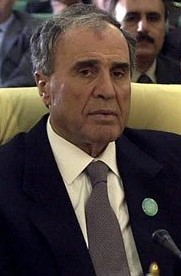
Ghazi Kanaan: The Man Who Owned Lebanon
For 20 years, no political decision in Lebanon could be made without his approval. Then the Hariri investigation reached his door.
Razan Zaitouneh: The Disappeared Conscience of the Revolution
She documented the Assad regime's atrocities from hiding inside Syria — only to be kidnapped by the rebel group that controlled her own neighborhood.

Steven Sotloff: The Reporter Who Hid His Identity to Survive — and Didn't
Jaish al-Islam: Siege, War Crimes, and Evacuation
The dominant faction of Eastern Ghouta committed atrocities while besieged for years — its leader killed by Russian airstrikes, its fighters eventually evacuated after a chemical weapons massacre.
